Afternoon tea traditions around the world reveal how different cultures have transformed a simple cup of tea into a meaningful ritual.
The British gave the world one of its most recognizable tea traditions: afternoon tea, with its tiered stands, finger sandwiches, scones, and carefully brewed pots of tea. Across the Channel, the French embraced tea rather differently—less as a prescribed ritual and more as an elegant pause in the day.
Both are beautiful. But they are not the same.
The British Tradition is Elegance and Ceremony
Britain’s relationship with tea stretches back centuries, but the tradition we now recognize as afternoon tea is generally associated with the 19th century and Anna Russell, Duchess of Bedford.
Served between lunch and the traditionally late Victorian dinner, afternoon tea became a fashionable social occasion. The familiar composition evolved around delicate sandwiches, scones with accompaniments, pastries and, of course, tea.
There is an appealing sense of order to the British tea table. Savory gives way to sweet. Tea is poured from the pot. Scones occupy a place of particular importance.
The French Tradition is Artistry and Sophistication
France may be better known internationally for café culture, yet the French have a long and sophisticated relationship with tea.
Rather than developing a single highly codified ritual equivalent to British afternoon tea, French tea culture became intertwined with the country’s traditions of pâtisserie, salons, conversation, and beautiful presentation.
A French tea experience may feel less concerned with following a sequence and more concerned with the pleasure of the moment.
The tea matters. The porcelain matters. The pastry certainly matters. And there is never a need to hurry.
In a Parisian salon de thé, tea might be accompanied by an exquisite éclair, madeleine, macaron, tart, or gâteau rather than the traditional British arrangement of sandwiches and scones.
The Teas Tell a Story, Too
British tea culture has historically favored robust black teas, including familiar blends such as English Breakfast and Earl Grey, often enjoyed with milk.
French tea culture developed a particular affinity for aromatic and flavored teas, alongside fine teas from the great tea-growing regions of the world. French tea houses often approach tea much as France approaches perfume or wine: through aroma, provenance, composition and sensory experience.
Travel farther south, however, and we encounter an entirely different tradition.
In South Africa, rooibos holds a special place at the table. Grown in the Cederberg region of the Western Cape, rooibos is not technically tea at all. It comes from Aspalathus linearis, a plant indigenous to South Africa. Naturally caffeine-free, it produces a beautiful amber-red infusion with a smooth, gently sweet character.
For many South Africans, rooibos is not an exotic wellness drink or fashionable alternative to tea. It is wonderfully ordinary: something found in the kitchen cupboard, offered to visitors and enjoyed throughout the day. It may be taken simply, with milk, lemon or honey, and increasingly appears in sophisticated blends and culinary creations.
That combination of everyday hospitality and distinctive sense of place is part of what makes rooibos so compelling.
How Afternoon Tea Traditions Inspire Fleur de Thé
The answer is: both—and neither exclusively.
Fleur de Thé was never intended to recreate a single historical tearoom tradition. Our inspiration is more international.
We love the ceremony and generosity of British afternoon tea. We are equally drawn to the French appreciation for pâtisserie, beautiful presentation, exotic tea selection and the chic salon de thé. And rooibos reminds us of warm South African hospitality that connects tea to community, landscape and home.
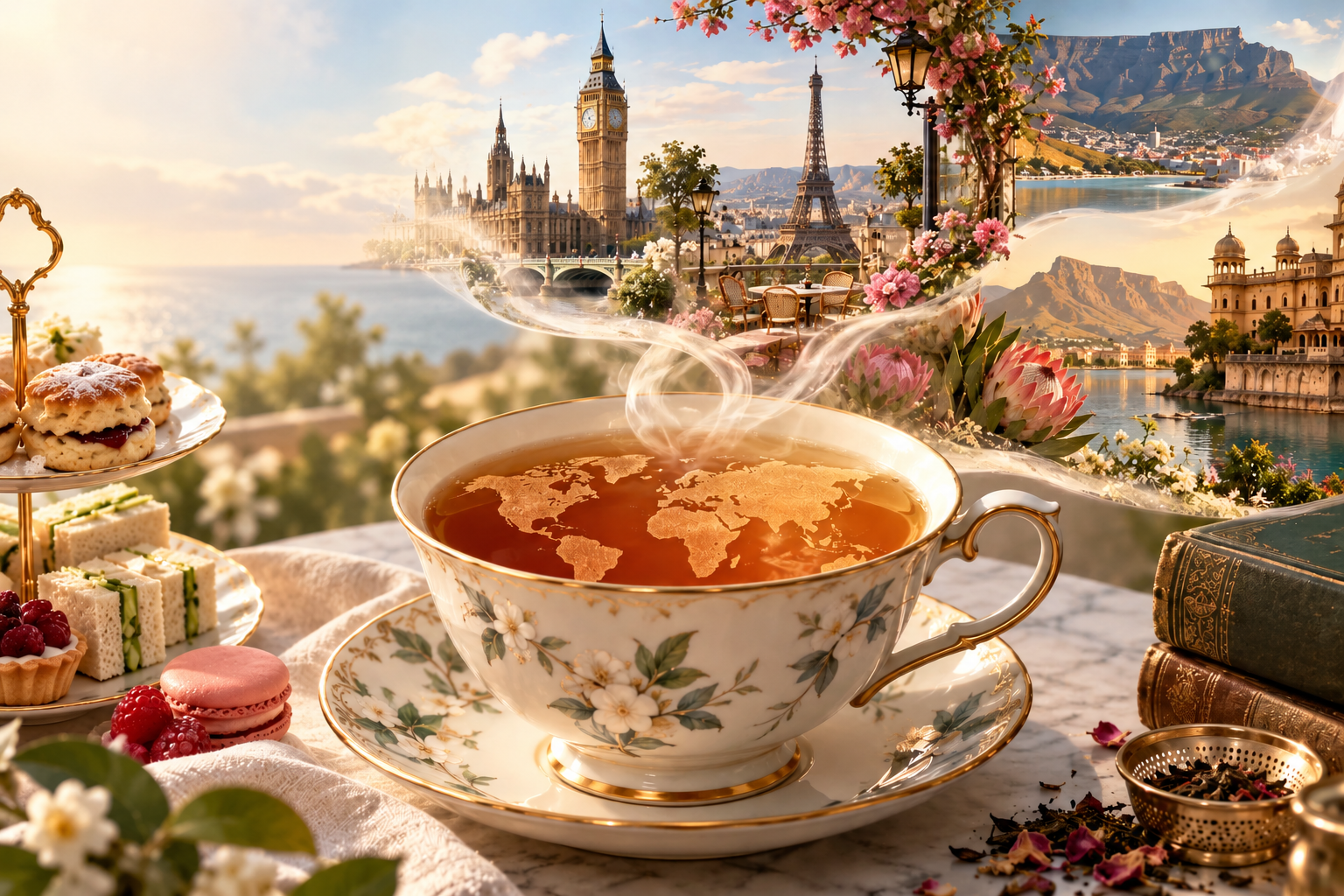
From Windsor to Udaipur, Versailles to Cape Town, each menu composition is an invitation to experience afternoon tea through a different cultural lens.
These global influences can be seen throughout our afternoon tea offerings, with each experience drawing inspiration from different tea traditions around the world.
Perhaps the Best Tradition Is Making Time To Take Tea
For all their differences, these tea traditions share something precious.
They ask us to stop. To be present in a beautiful space. To notice what we are tasting. To talk rather than scroll. To allow something as ordinary as an afternoon to become an occasion.
Taking tea creates a little space between everything we have just done and everything we still have to do.
Come create your own tea tradition at Fleur de Thé.